
Reviewed · POLYNESIAN CULTURE TOURS
Papeete cultural and historic walking tour at night
Papeete tells better stories after sunset. This two-hour walking tour uses projected old photographs, colonial buildings, and Polynesian objects to explain how Tahiti’s capital changed through French rule, local resistance, and modern life. I like the evening timing, when offices have emptied and the streets take on a different character. I also like the use of a video projector, which turns walls and urban spaces into a simple open-air museum.
The main drawback is that this is a walking experience with no private transportation, and the tour requires good weather. At $72.88 per person, the price is fair for a small group capped at 10 people, but it may feel high if you want only a quick orientation or prefer a traditional indoor museum.
In This Review
- Key Points Before You Book
- Why Papeete Works Better as an Evening Walk
- Meeting at the Papeete Tourist Office
- Around the French Polynesia Assembly
- Old Colonial Hospital Vaiami and the French Arrival
- Walking Through Former Colonial Papeete
- Polynesian Objects Before European Contact
- What the $72.88 Price Includes
- Who Will Enjoy This Papeete Experience
- Booking, Weather, and Practical Planning
- Should You Book the Night Walk?
- FAQ
- How long does the Papeete night walking tour last?
- What time does the tour start?
- Where does the tour begin?
- Where does the tour end?
- What is the price per person?
- Is transportation included?
- What is included in the tour?
- How many people can join the tour?
- Can I cancel for a full refund?
- What happens if bad weather cancels the tour?
Key Points Before You Book
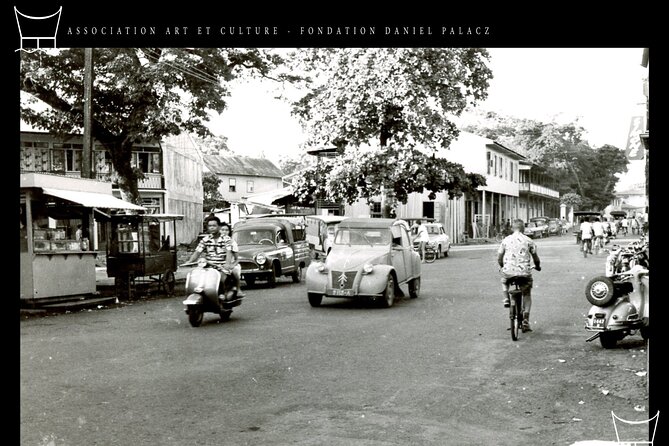
- Old photographs appear on city walls and other urban surfaces, linking present-day Papeete with its colonial past.
- The tour begins at 5:30 pm at the Papeete Tourist Office and returns to the same meeting point.
- The route includes the French Polynesia Assembly and Old Colonial Hospital Vaiami, two important historic locations.
- The final portion focuses on pre-European Polynesian life, using projected images of ancient objects.
- Groups are limited to 10 people, which should make it easier to hear the explanations and see the projections.
- Free cancellation is available up to 24 hours before departure, but poor weather can affect the experience.
Why Papeete Works Better as an Evening Walk
Papeete can feel very different once the workday ends. This tour starts at 5:30 pm, when offices are empty and bars and restaurants begin filling up. That timing gives you two views of the capital at once: the official city of government buildings and colonial institutions, and the social city beginning its evening routine.
I like this approach because Papeete is not presented as a collection of isolated monuments. The walk connects buildings, streets, political change, and ordinary urban life. You are not simply told that a building is old. You are shown how it fits into the story of Tahiti’s capital.
The projected photographs add a useful layer. Instead of looking only at a present-day wall, you may see what occupied that space in an earlier period. The city itself becomes the backdrop, and the contrast between current streets and old images helps you picture Papeete before modern traffic, offices, and restaurants shaped the center.
This is not a large theatrical production. The equipment listed is a video projector, and the experience remains a guided walk. That is part of its appeal, but you should not expect a museum with display cases or a formal auditorium. The city streets are the setting, so the experience depends on the guide’s explanations, the quality of the projections, and the weather.
More Polynesian culture visits on Tahiti:
- Discover the Beauty of Polynesian Waters by Boat and Snorkeling
★ 5.0 · 24 reviews - Papeete and Tahiti Historical and Cultural Tour
★ 5.0 · 8 reviews - Moorea Highlights Private Tour: Natural and Cultural Attraction
★ 5.0 · 7 reviews
Meeting at the Papeete Tourist Office
The tour begins at the Office du Tourisme, also called Fare Manihini, on the waterfront at N91, Quartier du Commerce, along Boulevard de la Reine Pōmare. The tour ends at the same meeting point, which makes planning easier if you are staying or dining nearby.
You should allow time to reach the office before the 5:30 pm start. Since no private transportation is included, you need to make your own way there. The provided details do not include hotel pickup, transfers, or transport between stops, so plan on walking for the entire activity.
The group limit is 10 people. That is a useful size for a presentation involving projected photographs. In a large crowd, it would be easy to lose sight of an image on a wall or miss part of the explanation while standing on a sidewalk. A small group should also allow for a more direct exchange with the guide, though the exact level of discussion can vary.
The activity lasts about two hours. Wear shoes you can walk in and bring practical evening clothing. The tour requires good weather, so keep some flexibility in your plans if rain is possible.
Around the French Polynesia Assembly
The first stop is the Assemblée de la Polynésie Française, or French Polynesia Assembly. The visit around this building lasts about five minutes, but the short stop can introduce a much larger subject: the political development of the capital and the wider territory.
Here, the old photographs are projected onto walls or other urban surfaces. The method helps place the building in its setting instead of treating it like a detached landmark. You can look at the present-day surroundings while seeing how this area appeared in the past.
This stop is especially useful if you want more than scenic photos of Papeete. The tour addresses the social, economic, and political changes that shaped the Polynesian capital. The Assembly provides a natural starting point because it represents public life and government.
The drawback is the brief duration. Five minutes is enough for a focused explanation, but not enough for a long architectural visit or a detailed look inside. Admission is not included, and the description does not promise entry to the building. Think of this as an exterior history stop rather than a visit to a government interior.
Old Colonial Hospital Vaiami and the French Arrival

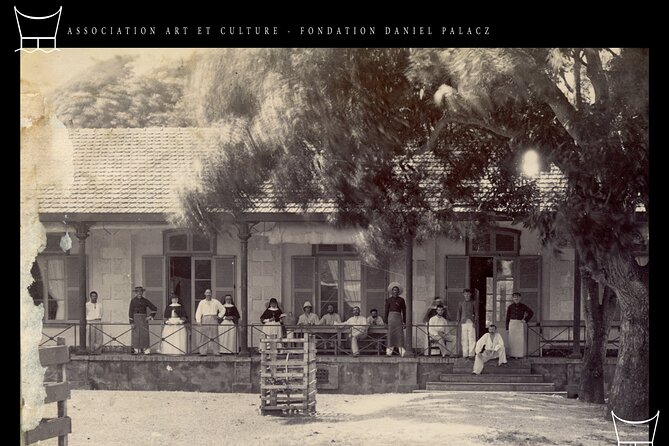
The next stop is Old Colonial Hospital Vaiami, described as the oldest colonial building in Papeete. It was built in 1848 during the war between Tahitian resistance fighters and French marines, giving the site a direct connection to one of the most important periods in the city’s colonial past.
The building is valuable because it brings political conflict down to a human scale. A hospital is not just a government structure. It points to illness, military presence, medical care, and the effects of a changing society. The tour uses the building to explain the heritage of Papeete and the period when French authority was taking shape.
This is one of the strongest parts of the route for anyone interested in colonial history. The date, 1848, gives you a clear point of reference, while the connection to Tahitian resistance helps prevent the story from becoming a simple account of French administration. You get a reminder that colonial change involved conflict and local opposition.
Again, the listed stop is about five minutes. That keeps the overall walk moving, but it also means the explanation will be selective. If you want a long visit inside the hospital or a detailed architectural study, this tour may not go far enough. Its goal is to place the building within Papeete’s story.
A few more Tahiti excursions to line up
- Papeete Walking Tour – Tahiti
★ 5.0 · 78 reviews - Papeete : walking tour
★ 4.9 · 69 reviews - Shared 2 Hour Papeete Walking Tour
★ 5.0 · 13 reviews - Private 2 Hour Walking Tour in Papeete
★ 5.0 · 8 reviews
Walking Through Former Colonial Papeete
The central section lasts about an hour and takes you through the streets of Papeete. Some streets may be lit and others less so, adding to the sense that you are looking at the city from a different angle after dark.
I like this part because it is less about one famous site and more about how a capital is built over time. The route examines the former French colonial city as a connected urban area. Old photographs projected along the way can help you compare current streets with earlier scenes and picture how people used these spaces in the past.
The evening setting matters here. During the working day, offices can dominate the feel of central Papeete. At 5:30 pm and afterward, the city begins to shift toward restaurants and bars. You get a more social view of the capital, rather than seeing only its administrative side.
The tour’s title promises culture and history, and this hour appears to carry much of that promise. You can expect stories about the development of Papeete, not just a list of dates. The focus includes social and economic change as well as politics, so the route should help explain why the city looks and functions as it does today.
Still, you should keep your expectations practical. A street walk cannot cover every neighborhood or every chapter of Tahitian history in two hours. The projections are also dependent on suitable surfaces, darkness, and weather. If the images are the main reason you book, remember that this is a mobile presentation rather than a permanent exhibition.
Polynesian Objects Before European Contact
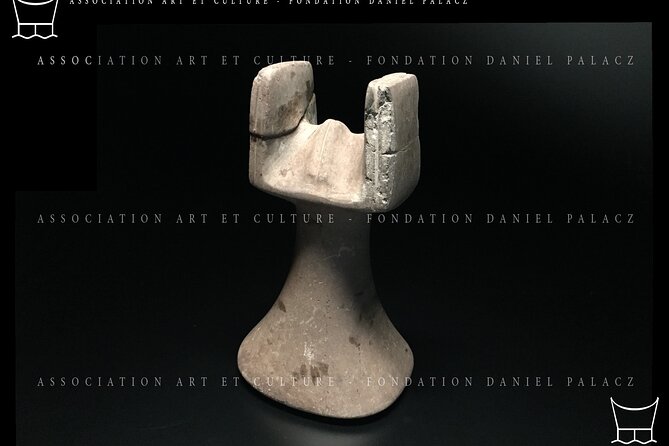
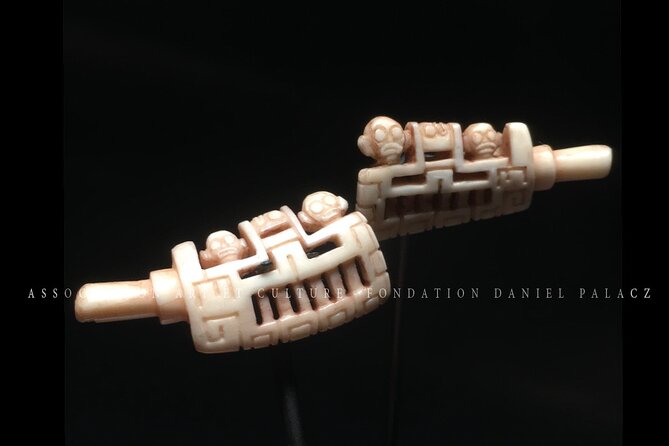
The final part turns to pre-European Polynesian life. Photos of ancient Polynesian objects are projected onto urban supports, giving you a visual introduction to a period before European contact.
This is an important choice for the tour. A walk focused only on colonial buildings could make Papeete’s story seem to begin with French arrival. The Polynesian objects widen the frame and remind you that Tahitian culture and society existed long before the colonial city developed.
The presentation appears to rely on photographs rather than physical objects. You will not be handling artifacts or walking through a museum collection. Instead, you see images in the streets where the modern capital now operates. That contrast can be powerful: traditional objects appear against the walls and structures of present-day Papeete.
The listed duration for this portion is 50 minutes, though the full experience is described as approximately two hours. It is best to treat the timing as an approximate breakdown rather than a strict schedule. The exact balance between walking, storytelling, and projected images may depend on the route and the group.
This section should suit you if you want cultural context rather than only colonial architecture. It also helps balance the tour politically and historically by including Polynesian life before European influence.
What the $72.88 Price Includes
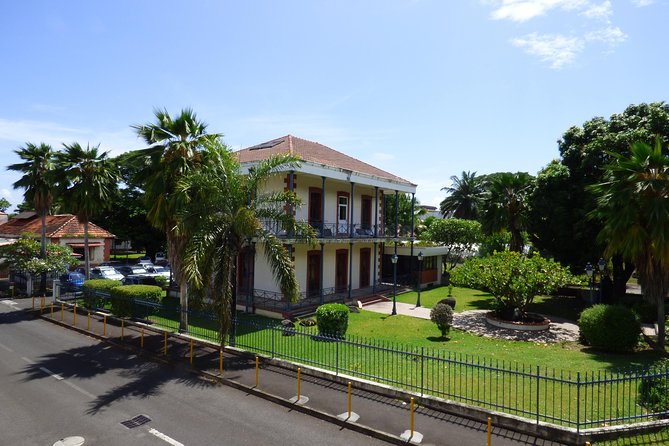
The cost is $72.88 per person. The stated inclusion is a video projector, while private transportation is not included. That means most of what you are paying for is the guided interpretation, the route, and the planned use of old photographs and object images in public spaces.
For a small group of no more than 10 people, the price can make sense if you value local context and a carefully arranged evening activity. The projected material gives the walk a clear identity beyond a standard city stroll. You are paying for a point of view on Papeete, not simply for movement from one landmark to another.
The value is less convincing if you mainly want transportation, admission to major buildings, or a broad sightseeing tour. There is no private vehicle, and admission tickets are not included for the listed stops. The route is best understood as a cultural walking experience with visual storytelling.
It is also worth noting that the experience is often booked about 42 days ahead. That suggests you should not leave it until the last moment, especially if your schedule in Tahiti is tight. The small group limit may be one reason advance planning helps.
Who Will Enjoy This Papeete Experience

I would recommend this tour to you if you enjoy learning how a city developed while you walk through it. It suits history-minded visitors, people interested in French Polynesia’s colonial period, and anyone who wants to understand Papeete beyond waterfront views and restaurants.
It should also work well for couples or small groups who want an evening activity with a clear beginning and end. Since the tour returns to the Tourist Office, you can arrange dinner or another evening plan afterward, though the exact timing may vary.
The experience may suit cruise visitors or short-stay guests who want a compact introduction to the capital. The two-hour length gives you useful context without taking an entire day. The small group size is another advantage if you prefer a quieter walk.
You may want to skip it if you dislike walking after dark, need private transportation, or want to visit interiors rather than view buildings from outside. It may also disappoint you if rain is likely and you have no spare evening for a rescheduled activity.
The tour has only two published ratings, both at five out of five, so the early response is very positive but based on a small sample. One review praised the chance to learn about Papeete’s past, present, and future. That is a good description of the tour’s purpose, though you should not treat two ratings as a full measure of every possible experience.
Booking, Weather, and Practical Planning
Confirmation is provided at booking. You can cancel for a full refund up to 24 hours before the local start time. Changes or cancellations inside that 24-hour window are not accepted for a refund.
Weather matters because the activity takes place outdoors and uses projected images. If poor weather causes cancellation, you are offered another date or a full refund. I would avoid placing this tour on the only evening you have available if the forecast looks uncertain.
The provider is FAATI CITY. A response to one participant is signed by Christian, who thanked the couple for choosing an unusual way to see Papeete at night. The available information does not provide a full guide biography, but Christian appears to be a contact connected with the experience.
Most people can take part, and no special qualification is listed. Since the route is on foot and runs for about two hours, your own comfort with walking should guide your decision.
Should You Book the Night Walk?
Book this tour if you want Papeete explained through streets, old photographs, colonial buildings, and Polynesian objects. The evening timing, small group limit, and open-air projection format give it a clear advantage over a basic daytime orientation walk.
At $72.88, I see the best value for you if cultural interpretation matters more than transport or entry tickets. You will get the most from it if you arrive ready to listen, look closely at the projected images, and think about how the same city has changed across different eras.
Skip it if you want a fast list of attractions, guaranteed indoor access, or a vehicle-based tour. For an evening introduction to Papeete’s political, colonial, and Polynesian story, though, this is a thoughtful choice with a strong sense of place.
FAQ
How long does the Papeete night walking tour last?
The experience lasts approximately two hours.
What time does the tour start?
The tour starts at 5:30 pm.
Where does the tour begin?
It begins at the Office du Tourisme, Fare Manihini, on the Front de Mer in Papeete, at N91, Quartier du Commerce, Boulevard de la Reine Pōmare.
Where does the tour end?
The activity ends back at the original meeting point.
What is the price per person?
The price is $72.88 per person.
Is transportation included?
No. Private transportation is not included.
What is included in the tour?
A video projector is included for projecting old photographs and images of Polynesian objects onto urban surfaces.
How many people can join the tour?
The group has a maximum of 10 participants.
Can I cancel for a full refund?
Yes. You can cancel at least 24 hours before the local start time for a full refund.
What happens if bad weather cancels the tour?
You will be offered a different date or a full refund.
More Evening Experiences in Tahiti
- Boat Trip with Sunset in Tahiti
★ 5.0 · 10 reviews - Private Boat Trip with Sunset / sunset cruise
★ 5.0 · 7 reviews - Sunset Cruise in Tahiti
★ 4.5 · 6 reviews - Sunset sailing trip on the Lagoon of Tahiti
★ 5.0 · 5 reviews
More Historical Tours in Tahiti
- Tahiti Private Half Day Tour. Nature, history and culture
★ 4.9 · 14 reviews - Bora Bora: 4WD History & Culture Tour
★ 4.6 · 69 reviews - Land and Sea cultural tour to discover traditions, heritage and the lagoon
★ 4.5 · 24 reviews
Newly listed on Tahiti
- Wholesale Fishing in Poti Marara at Tahiti Teahupoo Peninsula★ 5.0 · 4 reviews
- Small group snorkeling (5 people max): wrecks & tropical fishes at 3:30pm★ 5.0 · 7 reviews
- Teahupoo Olympic Wave Journey★ 5.0 · 6 reviews
- Whale Watching Activity★ 5.0 · 8 reviews
- VIP Ferry crossing from Tahiti to Moorea★ 5.0 · 2 reviews
- Sunset Cruise in Tahiti★ 4.5 · 6 reviews
- SURF TAHITI Bites & Waves – Surf experience with every bite★ 5.0 · 7 reviews
- Taxi Boat to Watch the Teahupoo International Surfing Competition★ 4.5 · 13 reviews
Polynesian Culture Tours, compared.
Full Day Combo ATV & Jet Ski with a Polynesian BBQ on a Motu
Read our review →
Bora Bora Snorkel Cruise by Polynesian Outrigger Canoe with BBQ Island Lunch
Read our review →

The Vanilla tour of Taha’a in a comfortable outrigger canoe
Read our review →
SHARED FULL DAY CULTURAL & LAGOON TOUR – Bora Bora Cultural Lagoon Tour
Read our review →
Private flight, in a light plane over the Polynesian motus from Raiatea
Read our review →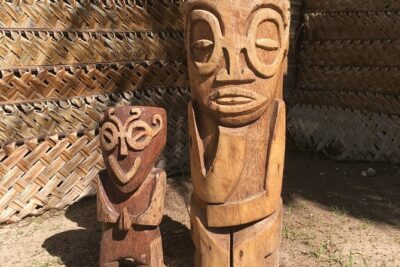
Land and Sea cultural tour to discover traditions, heritage and the lagoon
Read our review →Browse the lists this tour appears in