
Reviewed · WHALE WATCHING
Whale watching on the preserved and quiet coast of Paea (Pk26)
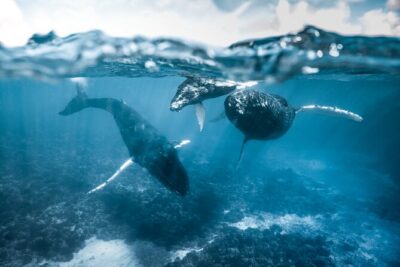
The ocean can change your whole day. This four-hour outing from Paea takes you along a quieter stretch of Tahiti between Paea and Papara, where humpback whales pass through during migration season. I like the small-group format and the care taken with official whale approach rules. I also like that the boat carries listening equipment, so you may hear male whale calls while watching the water.
The main catch is simple: whale sightings and swimming are never guaranteed. The sea may be rough, conditions can change quickly, and entering the water requires real swimming ability. At $205.27 per person, this is a serious splurge, but the combination of a modern boat, trained guides, and the chance to see humpbacks in open water can make it worthwhile.
In This Review
- Key points to know before booking
- Four hours on Tahiti’s preserved western coast
- Why the Paea and Papara route matters
- Finding humpback whales in open water
- Swimming with humpbacks is a demanding option
- Choosing between the three boat formats
- What the $205.27 price really buys
- Weather, seasickness, and what to pack
- Communication and guide quality
- Who will enjoy this most
- Booking and cancellation details to keep in mind
- Should you book the Paea whale tour?
- FAQ
- Where does the whale-watching tour begin?
- Is hotel pickup included?
- How long does the experience last?
- Are whale sightings guaranteed?
- Can everyone swim with the whales?
- What boat options are available?
- What happens if bad weather cancels the tour?
Key points to know before booking
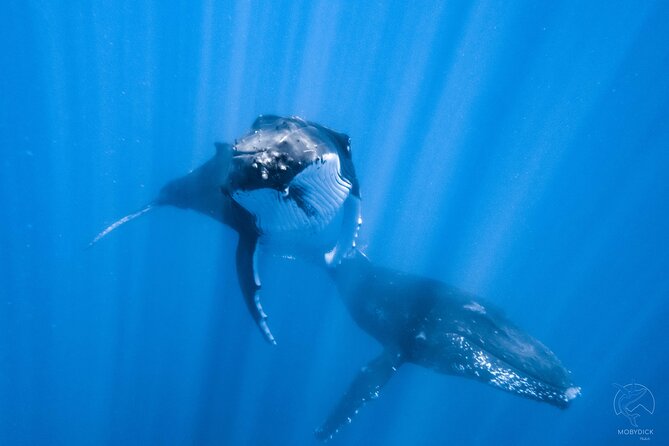
- Quiet departure area: The route explores the less-frequented coast between Paea and Papara rather than a crowded harbor zone.
- Three boat choices: Choose a boat for six swimmers, a boat for up to 12 swimmers, or a private boat for one to 12 people.
- Swimming requires fitness: You must be able to swim at least 200 meters wearing fins, a mask, and a snorkel.
- Wildlife comes first: Guides follow approach rules set by DIREN, Tahiti’s Regional Directorate for the Environment.
- No transport or changing room: You must reach the PK27 meeting point in Paea yourself, and boarding begins without a formal office or changing facility.
- Weather affects the plan: The boat can leave in suitable conditions, but swimming may still be refused if the sea or animals make it unsafe.
Four hours on Tahiti’s preserved western coast
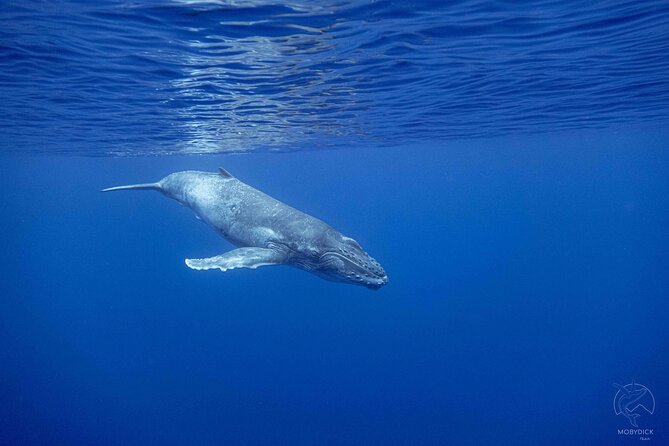
The trip begins at PK27 in Paea, on Tahiti’s west coast. The meeting point is easy to confuse with the tour’s general reference to PK26, so check your confirmation carefully and follow the exact instructions provided by Mobydick Tahiti.
There is no hotel pickup. You also should not expect a reception desk, waiting lounge, or changing room. Boarding is immediate, which keeps the operation simple but means you should arrive ready to go. Wear your swimsuit under your clothes, bring only what you need, and keep your dry items secure.
Before departure, the crew provides equipment and gives a safety briefing. This preparation can make the start feel slower than the advertised departure time. The listed meeting time is not necessarily the moment the boat leaves, since the crew must fit masks, fins, and snorkels, then explain the safety and whale-watching rules.
The full outing lasts about four hours. That gives the crew useful time to search, observe, and wait for suitable animal behavior rather than rushing back after a short sighting. Still, the clock is not a promise of four hours spent beside whales. Weather, sea conditions, and animal movement shape the day.
More Whale Watching in Tahiti
- Respectful whale excursion to Tahiti in 4h30
★ 4.5 · 123 reviews - Tahiti island: Whale watching Experience
★ 4.2 · 79 reviews - Guided Small Group Whale Watching and Swim Tour Tahiti
★ 5.0 · 57 reviews
Why the Paea and Papara route matters
Paea and Papara offer a less-frequented setting than some of Tahiti’s better-known coastal activity areas. That matters here. Whale watching works best when the boat can approach carefully, keep noise and pressure low, and give the animals room to move.
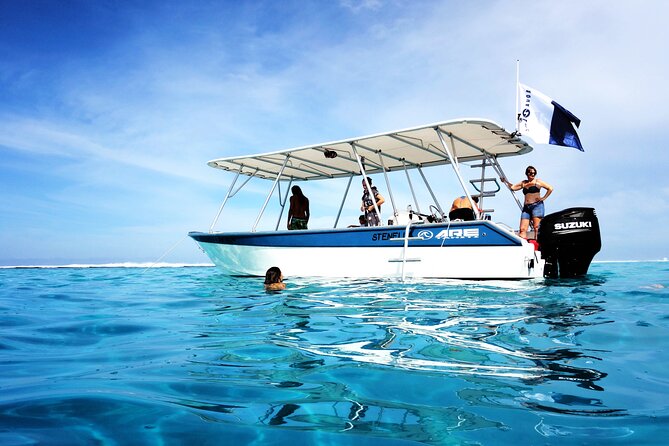
The boat is the Stenella, a modern 28-foot vessel described as comfortable and spacious. It is large enough for a stable ride compared with a tiny open skiff, but you are still on the ocean. This is not a sheltered lagoon cruise, and the water can become rough, especially on the return journey.
The western coast also gives the crew room to adjust the route. One outing started from Puna’auia instead because of the weather, showing that the launch plan may change when conditions require it. The exact route is less important than the crew’s ability to put safety first.
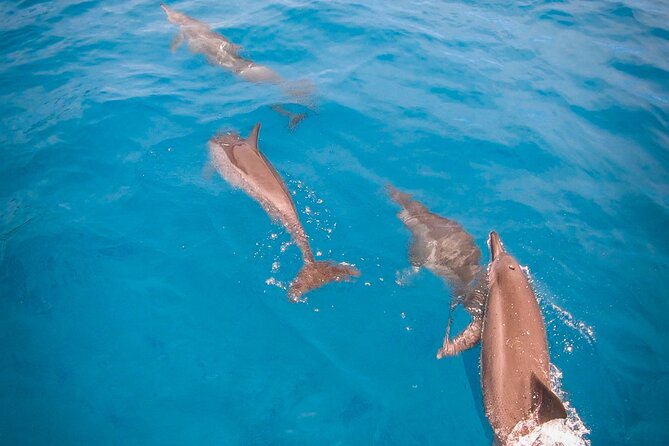
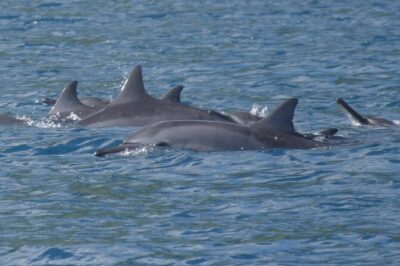
You may see more than whales. Past outings have included pods of dolphins, flying fish, and a grey shark. These sightings are extras, not promises, but they show why it pays to keep watching the water even when the main animals are submerged.
Finding humpback whales in open water
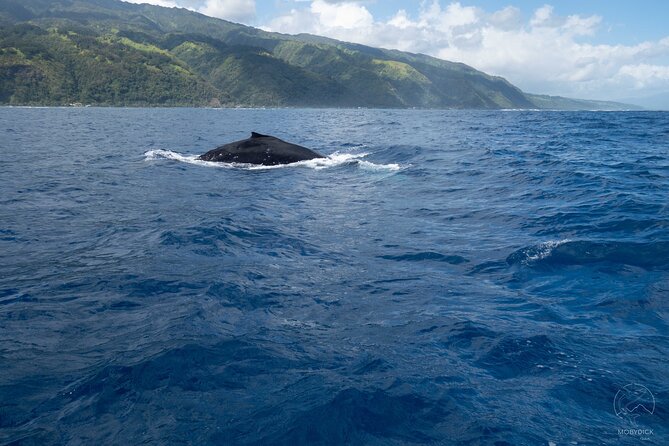
Humpback whales do not perform on schedule. You may see a back roll, a blow, a tail, or a whale surfacing below the boat. You may also spend long stretches scanning an apparently empty sea before an animal appears.
That uncertainty is part of the value and part of the risk. A whale-watching trip is not a wildlife theme park, and no sighting is guaranteed. The crew can search, read the conditions, and explain what you are seeing, but it cannot order a whale to surface beside the Stenella.
The guides are praised most strongly for their calm handling of the wildlife encounter and for helping people feel secure. They explain whale biology and supervise any water entry. Their role is not just to point at a fin. They help you understand animal behavior and decide when getting closer is appropriate.
The onboard listening system adds another layer. It broadcasts the calls of male whales, giving you something to focus on when the animals are below the surface. Listening for calls can make the quiet periods more interesting, and it helps you appreciate that the whales are present even when your eyes cannot find them.
Swimming with humpbacks is a demanding option
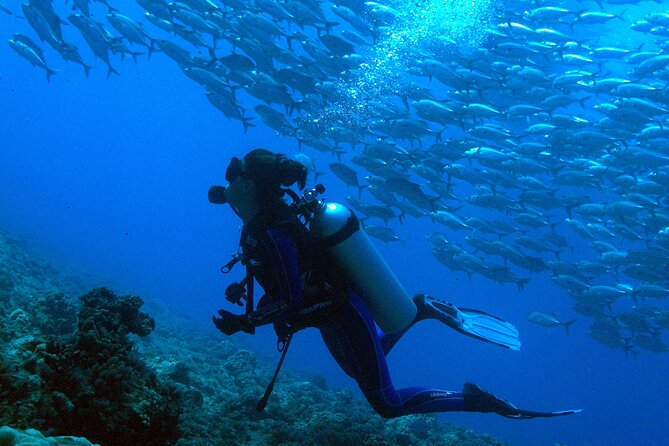
The chance to enter the water is the feature that makes this outing memorable for many people, but you should read the fitness requirement carefully. You must be able to swim at least 200 meters with fins, mask, and snorkel. That is not a casual paddle from the boat.
One detailed account described the water entry as more physically demanding than expected, including the need to swim quickly toward the whales. If you are not a confident open-water swimmer, choose the boat-only option and enjoy the encounter from above. You can still have a good outing without getting wet beyond the spray.
The guide has final authority over swimming. Even if whales are nearby, the crew may refuse entry because of sea conditions, animal behavior, safety concerns, or the ability of the group. That rule is appropriate. Wild whales are powerful animals, and responsible watching sometimes means staying on the boat.
Children under 10 cannot swim with the whales. The information provided does not say that younger children are prohibited from joining the boat, but it clearly rules out water entry for them. Confirm the current age arrangements before paying if your group includes children.
If more than six people in the 12-person boat want to enter the water, the crew uses a rotation system. This keeps the total group within the stated limit, but it can mean less time in the water for each swimmer. The six-swimmer boat is the better choice if the water entry is your main reason for booking.
More humpback watching off Tahiti:
- 4 Hours of Humpback Whale Watching in Tahiti
★ 5.0 · 36 reviews - Half Day Whale Watching in a Small Shared Group
★ 5.0 · 33 reviews - Observe and Swim with Whales in Tahiti
★ 4.5 · 14 reviews - Whale watching DE Tahiti Peninsula
★ 5.0 · 12 reviews
Choosing between the three boat formats
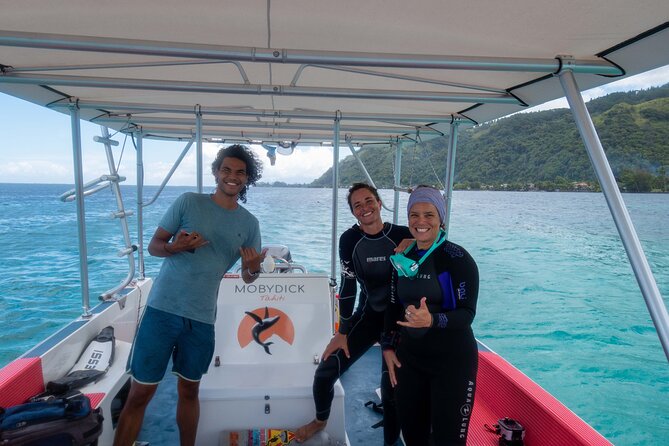
The six-swimmer boat is designed for people who want a smaller water group, along with observers who remain on board. Fewer swimmers mean less crowding around the entry point and a better chance of receiving individual guidance. This is the strongest choice for serious whale swimmers who value a quieter experience.
The 12-swimmer boat costs less, according to the tour description, and suits people who want to control the price. It can carry up to 12 swimmers, though rotation applies if more than six want to enter the water. If some members of your party only want to watch, clarify how the seating and water-entry arrangements work before booking.
A private boat accommodates one to 12 people. It is the most flexible option for families, couples, or a group that wants control over the passenger list. The price structure is not supplied here, so check the private rate rather than assuming it is simply $205.27 per person.
The maximum group size is 12. That is a useful limit in a wildlife setting. You will not be packed into a large excursion vessel, although the experience still depends on which boat option you select and how many people choose to swim.
What the $205.27 price really buys
At $205.27 per person, this is not a cheap way to spend a morning or afternoon in Tahiti. You are paying for a specialized marine outing, a four-hour search on open water, a modern 28-foot boat, equipment if needed, crew supervision, and the possibility of a rare encounter.
The price is easier to justify if you value responsible wildlife watching and want the option of entering the sea. It is harder to justify if your main goal is a guaranteed animal sighting or a relaxed sightseeing cruise. The fare buys access to the search, not a guaranteed whale performance.
Your value also depends on the boat choice. A smaller swimmer group may be worth extra money if you care about water time and personal attention. The 12-person option makes more sense for a budget-conscious group, especially if several people are happy to watch from the boat.
Because the experience is commonly booked around 17 days ahead, you should not leave it until the last minute during a busy Tahiti visit. Availability must be confirmed by the operator, and confirmation is not instant. You should receive confirmation within 48 hours, subject to space and operating conditions.
Weather, seasickness, and what to pack
Tahiti’s weather can change rapidly, and the sea may be calm at the meeting point but rough farther offshore. Bring sun protection and rain protection, not one or the other. A light waterproof layer is more useful than assuming the morning’s sunshine will last.
If you are prone to seasickness, speak with your pharmacist before the outing. This is especially important because the tour lasts about four hours and may involve waiting while the crew searches for whales. Once you are offshore, you cannot simply step onto land for a break.
Pack a swimsuit, towel, reef-safe sun protection if available, water, and a dry change of clothes. The operator provides snorkeling equipment if you do not have your own, but you may prefer your personal mask and snorkel if you already know they fit well.
Keep cameras and phones protected from spray. One outing ended with an underwater camera battery dying before the swim, so charge your equipment fully and consider bringing a secure waterproof case. Photography should remain secondary to listening to the guide and keeping your eyes on the animals.
Communication and guide quality
The main concern raised about communication is that parts of the experience may be conducted in French. The crew has also stated that an English briefing is normally given when English-speaking participants are present. If clear English instruction is important to you, confirm this before booking rather than relying on assumptions.
That briefing matters. It covers whale biology, safety, swimming conditions, and the rules for approaching the animals. You need to understand exactly when you may enter the water and what the crew expects once you are there.
The strongest praise is directed at the guides’ care and judgment. They help people manage the water entry, locate the whales, and understand the encounter. Isabel has also been singled out for handling a rough return to shore with skill.
The crew’s willingness to refuse swimming is a positive sign, not a failure. A responsible operator does not turn every whale sighting into a water entry. The goal is a safe encounter that respects the animals and the conditions.
Who will enjoy this most
I would recommend this trip to confident swimmers, wildlife enthusiasts, couples seeking a special Tahiti experience, and small groups willing to accept uncertainty. It suits you if seeing a humpback in open water sounds more exciting than spending the day on a predictable boat ride.
It is also a good fit for people who appreciate a quieter setting. The Paea and Papara coast is less frequently visited, and the limited group size keeps the outing more personal than a large whale-watching cruise.
You may want to skip it if you need a guaranteed sighting, dislike open-water motion, or are uncomfortable with a no-changing-room meeting point. It is also a weak choice for anyone who cannot swim 200 meters with snorkeling gear but is expecting to enter the sea.
The boat option can solve some problems. A non-swimmer can watch from the boat, while stronger swimmers use the water-entry option. Children under 10 cannot swim with the whales, so families need to set expectations clearly before arrival.
Booking and cancellation details to keep in mind
Confirmation is subject to availability and is not automatic at checkout. Check real-time availability with the operator, then wait for the formal confirmation within 48 hours.
The experience is non-refundable and cannot be changed for any reason after booking. That makes weather planning important, but poor weather is treated differently: if the operator cancels because conditions are unsafe, you are offered another date or a full refund.
The same applies if the minimum number of participants is not reached. You may be offered a different date or experience, or receive a full refund. Since you are responsible for reaching Paea yourself, leave enough flexibility in your itinerary in case the outing needs to move.
Should you book the Paea whale tour?
Book it if you want a serious wildlife outing, not a guaranteed photo opportunity. The best reasons are the small maximum group, the quiet western coast, the thoughtful approach rules, the onboard whale calls, and the possibility of swimming with humpbacks under close supervision.
I would choose the six-swimmer format if water entry is central to your plans. Pick the 12-person option if price matters more and you accept rotation. Choose private if your group wants control over the boat and budget allows it.
My main advice is to treat the swim as a bonus, not the product you are guaranteed to receive. Bring protection from sun, rain, and seasickness, arrive ready to board at PK27, and be honest about your swimming ability. If you can accept wild-animal uncertainty, this can be one of Tahiti’s most powerful marine experiences. If you need certainty, spend your money on a calmer, more predictable activity.
FAQ
Where does the whale-watching tour begin?
The meeting point is at PK27 in Paea, French Polynesia. The outing ends back at the same meeting point.
Is hotel pickup included?
No. You must arrange your own transport to the meeting point in Paea.
How long does the experience last?
The tour lasts approximately four hours.
Are whale sightings guaranteed?
No. Humpback whales are wild and unpredictable, so sightings cannot be guaranteed.
Can everyone swim with the whales?
No. You must be able to swim at least 200 meters with fins, a mask, and a snorkel. Children under 10 cannot enter the water, and the guide may refuse swimming based on conditions.
What boat options are available?
You can choose a boat for six swimmers plus observers, a boat for up to 12 swimmers, or a private boat for one to 12 passengers.
What happens if bad weather cancels the tour?
If the operator cancels because of poor weather, you are offered a different date or a full refund.
Newly listed on Tahiti
- Wholesale Fishing in Poti Marara at Tahiti Teahupoo Peninsula★ 5.0 · 4 reviews
- Small group snorkeling (5 people max): wrecks & tropical fishes at 3:30pm★ 5.0 · 7 reviews
- Whale Watching Activity★ 5.0 · 8 reviews
- VIP Ferry crossing from Tahiti to Moorea★ 5.0 · 2 reviews
- Teahupoo Olympic Wave Journey★ 5.0 · 6 reviews
- Sunset Cruise in Tahiti★ 4.5 · 6 reviews
- SURF TAHITI Bites & Waves – Surf experience with every bite★ 5.0 · 7 reviews
- Taxi Boat to Watch the Teahupoo International Surfing Competition★ 4.5 · 13 reviews
Whale Watching, compared.
Swimming with Whales in Moorea (Half Day tour)
Read our review →
Humpback whale watching and marine life in Moorea
Read our review →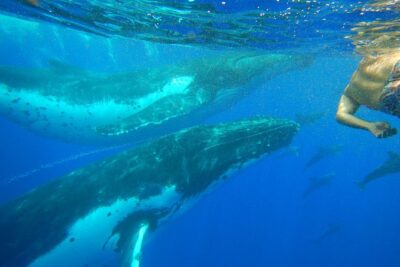
Private tour observing and swimming with humpback whales in Moorea
Read our review →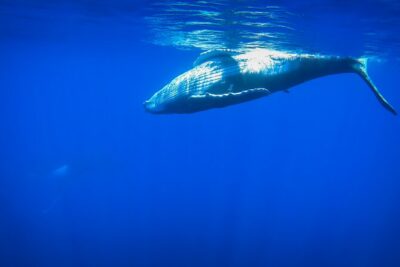
Browse the lists this tour appears in